
Crude Oil
A liquid found naturally in rock, made up mostly of complex hydrocarbons with some additional organic material. It is the major fuel used on the planet and feeds the production of many synthetic materials, including plastics.

Product is mainly obtained from West Africa and the CIS, with new routes secured for refineries through producers in the Middle East and North Africa.

A liquid found naturally in rock, made up mostly of complex hydrocarbons with some additional organic material. It is the major fuel used on the planet and feeds the production of many synthetic materials, including plastics.

Gas and diesel oil, including heavy gas oils. Gas oils come from the lowest fraction of atmospheric distillation; heavy gas oils from vacuum redistillation of the residue. Gas oil distils between 180°C and 380°C.

A volatile, petroleum-derived mixture of flammable liquid hydrocarbons, used principally as a fuel for internal combustion engines.
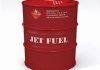
Aviation fuel for gas-turbine aircraft, clear to straw coloured. The common grades are Jet A and Jet A-1, produced to internationally standardised specifications; Jet B is used for its cold-weather performance.
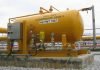
A low-density mixture of hydrocarbon liquids present as gaseous components in raw natural gas, remaining liquid at normal temperature and pressure.
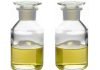
Refined from crude oil and combined with additives to produce lubricants. A typical lubricant is at least 90% base oil and less than 10% additives.

A flammable, whitish, translucent waxy solid of saturated hydrocarbons, used in candles, cosmetics, polishes and waterproofing; also a colourless oily liquid used as fuel.
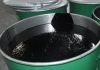
A solid to viscous hydrocarbon, brown to black, obtained by vacuum distillation of oil residues. Often called asphalt, used mainly for road surfacing and roofing.
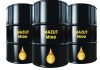
A heavy fuel oil left after distillation of lighter fractions. Used as boiler fuel, in preparing lubricating oils, and in cracking or hydrogenation for motor fuel.